Translate

Tuesday, 30 July 2019

Google researchers disclose ‘interactionless’ iOS exploits valued at $5M


A duo of Google bug-hunting researchers have disclosed several “interactionless” vulnerabilities in iOS that made it possible for hackers to hijack your iPhone via iMessage – without even engaging with the malicious texts. The researchers, Natalie Silvanovich and Samuel Groß, who work with Google’s security task force Project Zero have so far released details for only five out of the six bugs found, ZDNet reports. Four out of these bugs can lead to the execution of malicious code on remote iOS devices, without any significant user interaction. All it takes to perform the attacks successfully is delivering an infectious message and enticing the…

This story continues at The Next Web

Or just read more coverage about: iOS,Google

Hemingway review: UE Wonderboom 2


There’s an urban legend that finds Ernest Hemingway in a restaurant with his friends. He bet everyone around the table that he could write a story in only six words — they accepted. So, he leaned down, wrote “For sale: baby shoes, never worn” on a napkin, passed it around, and collected his winnings. This got us thinking: if Hemingway could write an entire story in six words, we should be able to review a product in the same number. So, enter the Hemingway review. This time round we’re looking at the UE Wonderboom 2, a portable Bluetooth speaker. Here’s a picture…

This story continues at The Next Web

Dinosaurs are dead, but there’s still life inside their bones


One of the tricks you learn hunting dinosaurs in Canada is to look for orange. Dinosaur bones are dull browns, tans, and greys. But in the middle of the drab sandstones of the badlands – a dry landscape where wind and water have worn away much of the rock – you’ll sometimes catch a flash of fluorescent orange. Walk over and you may well find a dinosaur bone weathering out. The orange is lichen, growing on the bone. The bone gives the lichen a stable foothold in the eroding landscape, it’s porous, storing moisture during droughts, and full of minerals…

This story continues at The Next Web

Opportunistic hackers delete files from Iomega network drives, demand Bitcoin ransom


Nefarious hackers are wiping files on publicly accessible storage devices and leaving just a Bitcoin ransom note behind. According to users on the BleepingComputer forums, files on their Lenovo Iomega NAS (network attached storage) devices are allegedly being deleted or hidden. The attackers are demanding Bitcoin in exchange for the safe return of victims’ files. After the attack, victims are finding their NAS drives empty, except for a text file with the name “YOUR FILES ARE SAFE!!!” One of the ransom notes outlines the attackers’ demand of 0.03 Bitcoin ($280). In this instance, attackers give the victim a deadline of…

This story continues at The Next Web

Or just read more coverage about: Bitcoin

Machine Learning to Predict Childhood PTSD

More than 20% of children in the United States will experience a traumatic event before they are 16 years old, but only some will go on to develop post-traumatic stress disorder (PTSD). How can we know which child is at risk for PTSD so that it can be prevented?

More than two- thirds of children experience at least one traumatic event by age 16. Some 10 – 40% of these children will go on to develop post-traumatic stress disorder (PTSD). PTSD is a serious debilitating psychiatric condition that can have a significant impact on a child’s functioning and, perhaps, even the development of their brain. Research tells us that traumatic childhood events can result in mental health and behavioral issues for people later in life.

Some research indicates that if a child that is at risk of developing PTSD is identified early enough, the condition may be prevented. But how can such a child be identified? In recent years, scientists have been employing machine learning to many complicated issues, including to help with the diagnoses of mental illness.

Dr. Glenn Saxe, professor of Child and Adolescent Psychiatry at New York University School of Medicine and his team used machine learning to try to predict which children would develop PTSD after a traumatic event.

Why machine learning?

Dr Saxe explains machine learning is a computational approach designed to find patterns in data that will form reliable and accurate predictive models of specified events (e.g. the occurrence of PTSD in a traumatized child). Specified algorithms search through the space of possibilities contained in the data, to arrive at a predictive model. Afterward the reliability and accuracy of this predictive model are tested on raw data the ‘machine’ has not yet encountered.

Proof-of-concept study

In a proof-of-concept study published in BMC Psychiatry, Saxe and his team were able to use machine learning to predict PTSD with significant accuracy.

The researchers took 105 potential biopsychosocial risk factor variables into account. This was data that could be collected during a child’s hospital visit and included demographics, child symptoms, parent symptoms, stress, the magnitude of the injury, and several genetic and neurological variables. Their machine learning algorithms used that information to find patterns in the data, eventually ranking each child’s risk factors in a very complicated calculation.

The data was of 163 children hospitalized with an injury. PTSD was determined three months after hospital discharge. The 105 risk factor variables were collected during hospitalization.

In this instance, the machine learning helped to predict which children were most likely to develop PTSD as a result of their injuries. This outcome has great potential for early treatment and possibly even prevention of PTSD.

Which variables predicted PTSD?

The researchers found a set of causal variables, measured around the time of trauma that predicted PTSD, three months later. This included the identification of certain candidate genes, the child’s level of acute pain and the parent’s level of acute distress.

Factors that protect against PSTD

The researchers found that certain factors seem to protect against PTSD. These included being breastfed as an infant and regular attendance of religious services. The researchers say these factors indicate the importance of human attachment, community and spirituality in the recovery from childhood trauma.

Machine learning can be employed to identify whether a child is likely to develop PTSD as a result of a trauma. Scientists have also been able to identify the variables that protect children against developing PTSD.

The post Machine Learning to Predict Childhood PTSD appeared first on The Tech Edvocate.


from The Tech Edvocate https://ift.tt/2SWFUrG
via IFTTT

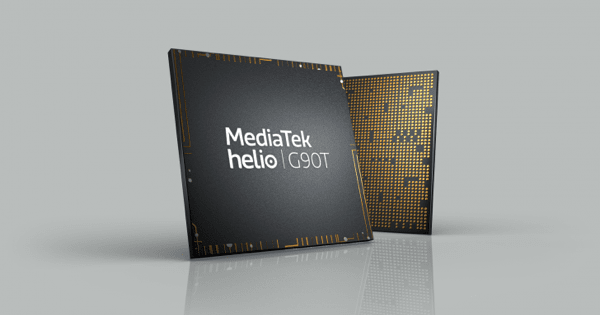
MediaTek takes on Qualcomm’s Snapdragon with a new gaming chipset for phones


MediaTek just released its two new gaming-focused chipsets: the G90 and the G90T. These 12nm octa-core chips have a similar design to Qualcomm’s Snapdragon and Huawei’s Kirin chips with ARM Cortex-A76 and A55 cores. These chips clock up to 2.05GHz and can support a 10GB LPDDR4x RAM. Plus, it sports ARM’s Mali G76 GPU with speeds of up to 800MHz. The CPUs also support a single 64-megapixel camera sensor or a combination of 24-megapixel and 16-megapixel sensors. The chipmaker says the G90 series is powered by its “HyperEngine game technology” that supports simultaneous dual-band WiFi connection, smooth switching from mobile to wireless networks, improved…

This story continues at The Next Web

India to seek EU’s approval on GDPR compliance for ‘adequacy’ status


The Economic Times reports that India is gearing up to seek ‘adequacy’ status with the European Union‘s General Data Protection Regulation (GDPR), a set of privacy laws adopted by the region in 2016 and enforced from last year. If it goes through, it would mean that the EU recognizes India’s data protections as equivalent to those required by GDPR. This, in turn, would allow EU tech firms to store and transfer data in India, and could enable companies in Europe to outsource data-intensive projects to India while complying with GDPR. The rules hold ‘controllers’ – people and organizations in charge…

This story continues at The Next Web

Bitcoin has record-breaking Q2, network health at all time high – here’s what happened


Bitcoin, the cryptocurrency that started it all. It first entered the wild ten years ago after its pseudonymous creator Satoshi Nakamoto released the eponymous white paper and got the world thinking about decentralized digital cash. The initial objective was to create an online peer-to-peer digital cash system that lets users transfer value online while only having to reveal information required to the transaction – ensuring privacy and confidentiality. Many other cryptocurrencies have spawned following the launch of Bitcoin. Take Litecoin for example, it uses some base code from Bitcoin, and tweaks to decrease the time it takes for transactions to be…

This story continues at The Next Web

Or just read more coverage about: Bitcoin

Monday, 29 July 2019

Capital One data breach compromises 106 million customers’ personal data


US-based bank, Capital One, revealed last night a data breach that exposed data of exposed the data of 106 million credit card applicants including names, phone numbers, addresses, and dates of birth. In addition, 140,000 US social security numbers, 80,000 bank account numbers, and 1 million Canadian social insurance numbers were also stolen. The bank said while no credit card account numbers or login details were compromised, the lone hacker got hold of credit scores, credit limits, balances, and payment history. The Federal Bureau of Investigation (FBI) has arrested the hacker, named Paige Thompson, behind the data breach, in Seattle. According to a…

This story continues at The Next Web

Researchers: Anonymized data does little to protect user privacy


Providing third-parties with data is a necessary cost of living in the 21st century. Whether it’s securing auto insurance, undergoing a routine examination at the dentist, or chatting up friends and relatives on Facebook, each of us will hand over about 1.7MB of data per second next year, according to one recent report. While our anxiety around how this data will be used has grown considerably in recent years, culminating with the launch of a federal probe by the DOJ in recent weeks, it’s done little to stop the flow of information from individuals to companies, or from one company to…

This story continues at The Next Web

Rockstar Games reportedly claimed GTA V was ‘culturally British’ to skimp on taxes


A British think tank has revealed in a new study that Rockstar Games has apparently ducked taxes in the UK and received millions of pounds in subsidies — the latter by claiming at least one of its games, Grand Theft Auto V, to be a British game. Tax Watch UK this week published a report titled “Gaming the System.” It claims that, through offshoring of profits, Rockstar North (the primary development studio of GTA V) has not paid any UK taxes in ten years. In the five years after GTA V’s release, Rockstar and parent company Take-Two’s UK-based studios claimed a profit…

This story continues at The Next Web

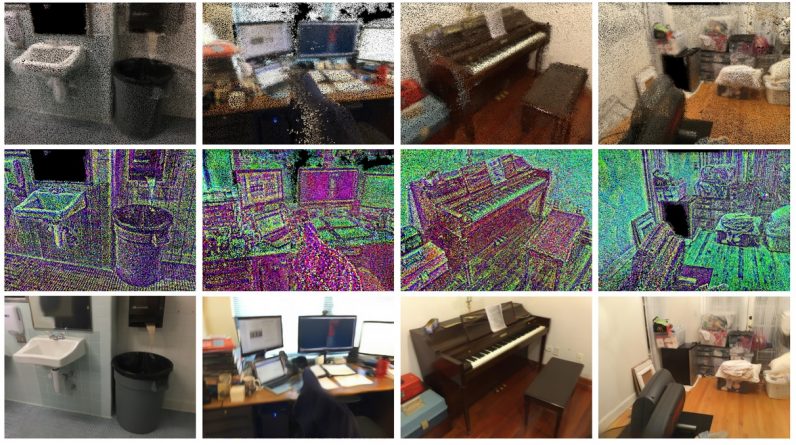
Watch Samsung’s AI render photorealistic scenes from video


A trio of Samsung AI researchers recently developed a neural network capable of rendering photorealistic graphical scenes with a novel viewpoint from a video. In the above video we see a 3D rendering of a complex scene. It was created by turning a video input into a bunch of points representing the geometry of the scene. The points, which form a cloud, are then fed to a neural network that renders them as computer graphics. TNW reached out to Dmitry Ulyanov, a researcher at Samsung and one of the authors on the team’s paper, to find out more about the project.…

This story continues at The Next Web

Or just read more coverage about: Samsung

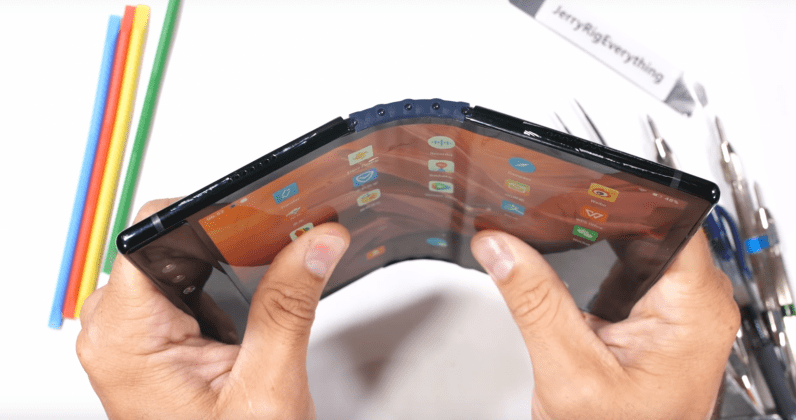
Watch what happens when you bend a foldable phone past its breaking point


YouTuber JerryRigEverything‘s claim to fame is his collection of phone torture tests – especially the parts where he tries to break a phone by bending it with his beefy arms. But what happens when that phone is actually meant to bend? At first, it seems the perfect foible, until you remember bendable phones are only meant to bend one way. The star of this most recent bit of tech gore is the Royole Flexpie, a phone that beat Samsung and Huawei to the punch in making the world’s first foldable phone.  You can watch the whole thing below before reading on…

This story continues at The Next Web